World
Commercial Transit Warning Issued After Explosive Ordnance Recovery in Vågsfjorden Shipping Lanes
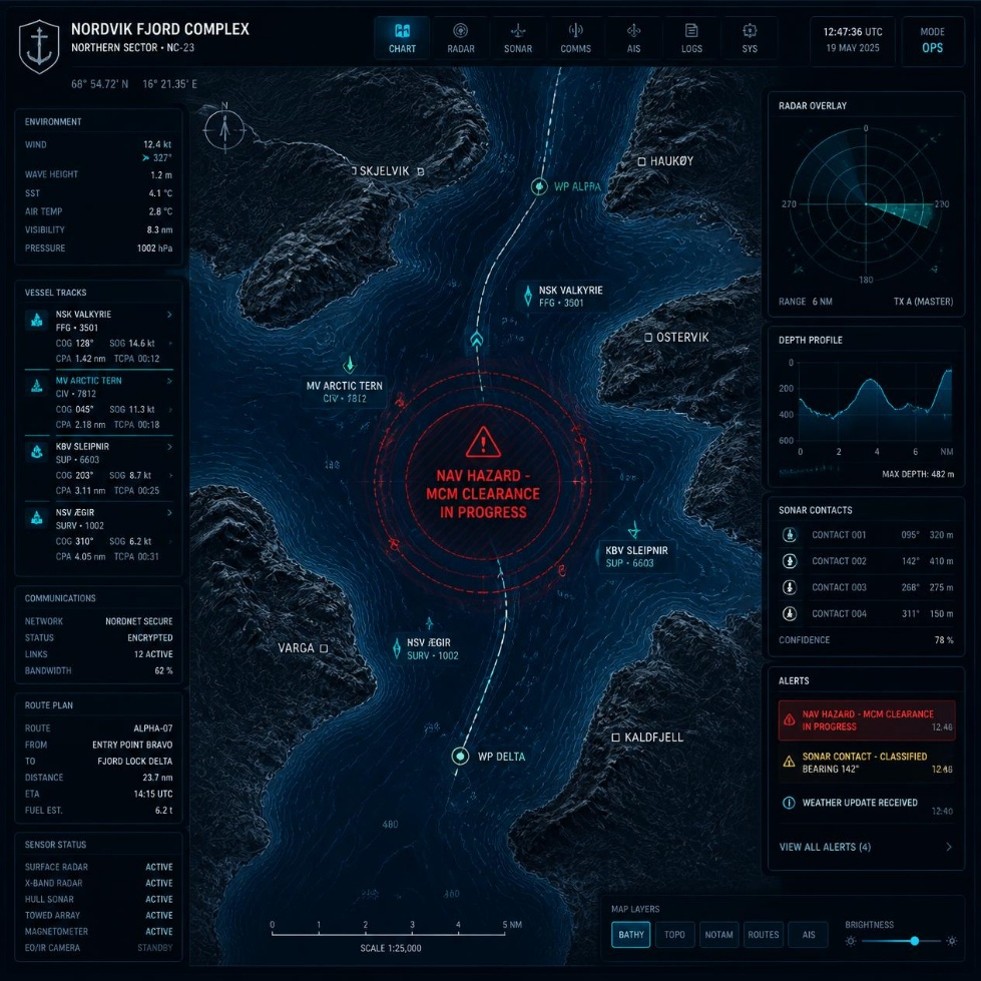
HARSTAD, Norway — The Norwegian Maritime Authority (Sjøfartsdirektoratet) and regional coast guard command have issued an immediate navigation notice to commercial shipping following the discovery and neutralization of submerged explosive devices in the primary deep-water transit routes of Vågsfjorden.
The incident occurred early Saturday morning during routine sea-lane clearance and mine countermeasures (MCM) sweeps along primary maritime approaches serving the Troms sector.
Mines Neutralized Along Vital Sea Line of Communication
According to statement details released by the Norwegian Navy Mine Countermeasures Element, minesweepers operating in the Vågsfjorden channel detected and recovered two moored Limpet-type anti-ship explosive devices fixed to navigational aids. The devices were mounted directly on commercial buoy mooring systems in proximity to deep-water navigation channels.
Naval EOD divers executed controlled render-safe procedures on-site before securing the munitions for technical analysis. Official assessments indicate the placement was intended to disrupt heavy amphibious shipping and supply vessels servicing regional port hubs.
Commercial Shipping Delays and Routing Adjustments
The discovery has prompted immediate alterations to commercial transit schedules across the sector. Authorities have established a temporary 5-nautical-mile buffer zone around Grid 33W VR 154 881 while additional MCM assets execute high-resolution side-scan sonar sweeps of adjacent seabed channels.
"Commercial vessel masters operating between Bodø, Harstad, and Tromsø are instructed to maintain strict adherence to designated safe corridors and monitor coastal radio alerts on VHF Channel 16," stated a representative from the Norwegian Coast Guard Command. "Channel clearance operations remain ongoing to ensure the safety of both civil cargo transport and allied maritime logistics."
Industry analysts note that Vågsfjorden serves as a critical bottleneck for regional supply chains, supporting both civilian freight distribution and military logistics movements under ongoing NATO operations.
Security Assessment & Asymmetric Maritime Threats
Defense analysts point to the involvement of specialized maritime sabotage assets, attributing the deployment style to adversary Special Purpose Forces (SPF) maritime cells. Similar devices have previously been documented in non-linear maritime operations aimed at channeling naval logistics vessels into constrained maritime choke points.
Shipping companies operating Arctic routes have been advised to increase vessel watchstanding protocols, inspect anchor chains prior to transit, and report any unscheduled stationary craft observed near navigation marks.
Port operations in Harstad and surrounding terminals remain operational, though incoming cargo vessels can expect clearance delays ranging from 12 to 24 hours while naval clearance operations conclude.
Originally published by Nordic Maritime & Logistics Review — Industry Trade Journal.
- Energy
- Norway
- Arctic
- Baltic States
- High North