Breaking
Frontline
HV-16 Mobilizes in Northern Norway Amid Growing Cyber Attacks, Infrastructure Sabotage, and Border Tensions
As hybrid pressure from Murinus proxies accelerates across Troms and Finnmark, Norwegian Home Guard units and Allied forces prepare for potential escalation.
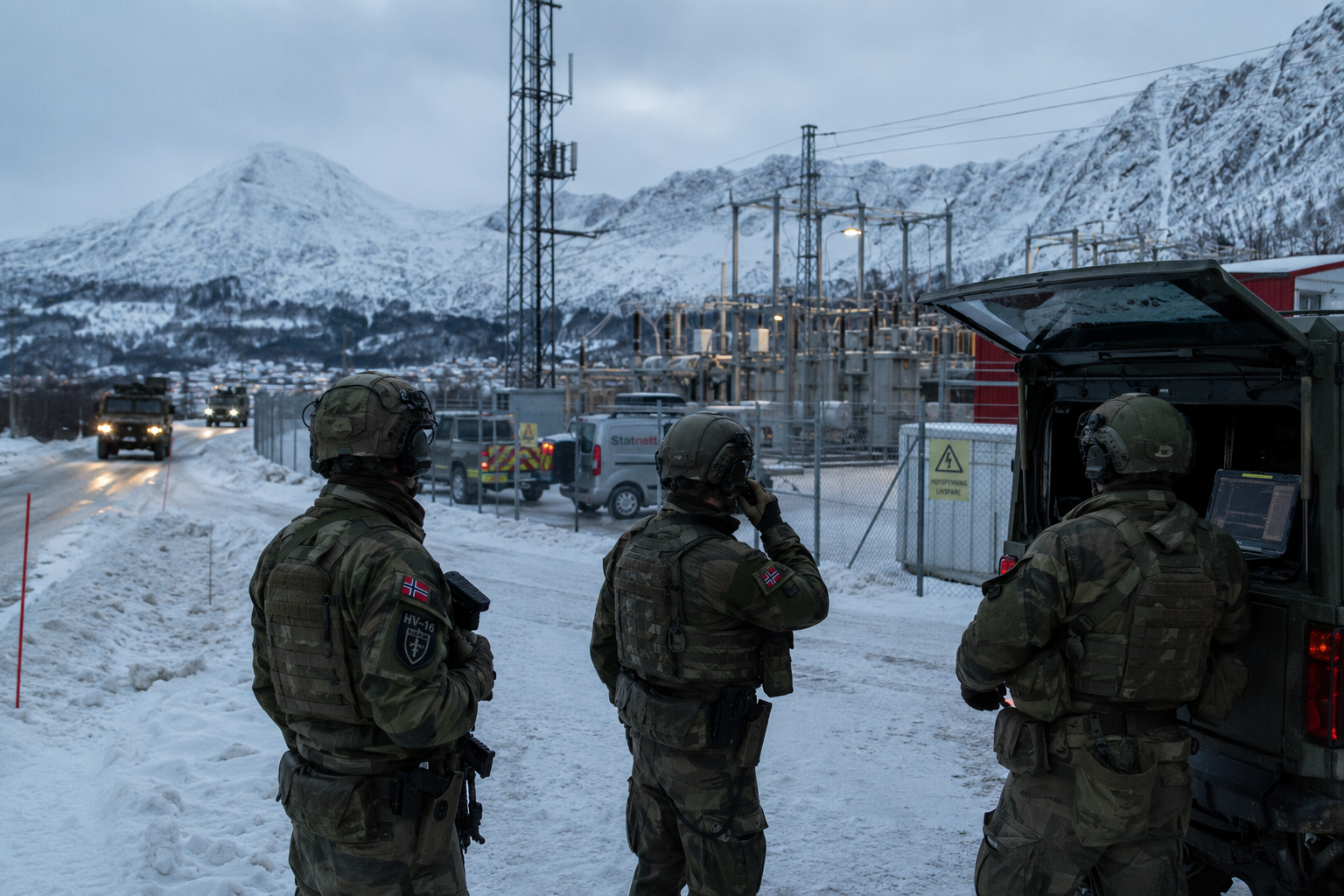
Military readiness across northern Norway reached its highest level since the outbreak of the High North conflict today as Norwegian Home Guard (Heimevernet) units, supported by NATO Special Operations Task Group personnel, intensified counter-sabotage and defense operations across Troms and Finnmark.
The surge follows a series of operational incidents over the past 48 hours highlighting an aggressive, non-linear campaign aimed at crippling civil infrastructure and probing Allied early-warning capabilities along the border.
Early Sunday morning, Norwegian Special Operations Command (NORSOCOM) reconnaissance patrols operating alongside HV-17 local defense cadres on the Finnmark Plateau broke contact with a six-man Murinus Special Purpose Forces (SPF) recon element attempting to establish covert observation posts along key mountain passes. Meanwhile, in Narvik, cyber units from the HV-16 District Headquarters successfully isolated a sophisticated network breach after hostile operators attempted to manipulate tactical C2 data.
"What we are seeing is not seasonal posturing or standard exercise activity," said Dr. Eirik Madsen, a senior fellow at the North Atlantic Security Institute. "The operational logic matches the aggressive posture Sonnenburg has signaled since abandoning the Barents Sea Energy Treaty and activating the 4th Joint Forces Command Arctic. Murinus is using non-linear proxies, specialized cyber elements, and forward reconnaissance to systematically map host-nation resistance infrastructure and prepare the ground for further conventional pressure."
The hybrid threat is increasingly spilling into the civil domain. Over the weekend, Norwegian Military Police intercepted Mursevskaya (MSK) syndicate operatives attempting to contaminate the water intake facility at Bardufoss Garrison, while Coast Guard Explosive Ordnance Disposal (EOD) teams rendered safe a magnetic limpet mine attached to maritime logistics equipment at the Skjold port berth. Digital forensics linked the device to the Night Bears Motorcycle Club, a known proxy criminal network operating out of Narvik.
Regional power distribution networks have also come under strain. Security agencies neutralized a coordinated ransomware attack against the Troms og Finnmark Regional Load Dispatch Center after an insider linked to the political subversion group Northern Prosperity Movement granted physical network access to foreign cyber handlers.
At the diplomatic level, intelligence services in Oslo and Allied capitals remain on high alert following a walk-in attempt at the U.S. Embassy diplomatic annex in Oslo, where a local source presenting credentialed access offered information regarding foreign covert armories and asset deployments. Intelligence officials assess the contact may have been an adversary probe intended to test Allied counterintelligence protocols and map collection priorities.
With NATO's Joint Task Force North continuing enabling deployments under SACEUR orders, military officials emphasize that the primary defense objective remains demonstrating resolute readiness while managing escalation risks.
"Our Home Guard forces and Allied partners are fully integrated, vigilant, and holding the line," a Norwegian Joint Headquarters spokesperson stated. "Any attempt to disrupt host-nation mobilization or compromise Norwegian sovereignty will be met with a swift, coordinated response."
Originally published by Aftenposten — National Security & Geopolitics Desk - Oslo.
- Norway
- High North
- Arctic
- Murinus
- NATO
- Military Buildup
- Hybrid Warfare
- Home Guard