Frontline
The "New Day Podcast"; A Rising Star in Norwegian Community Resilience
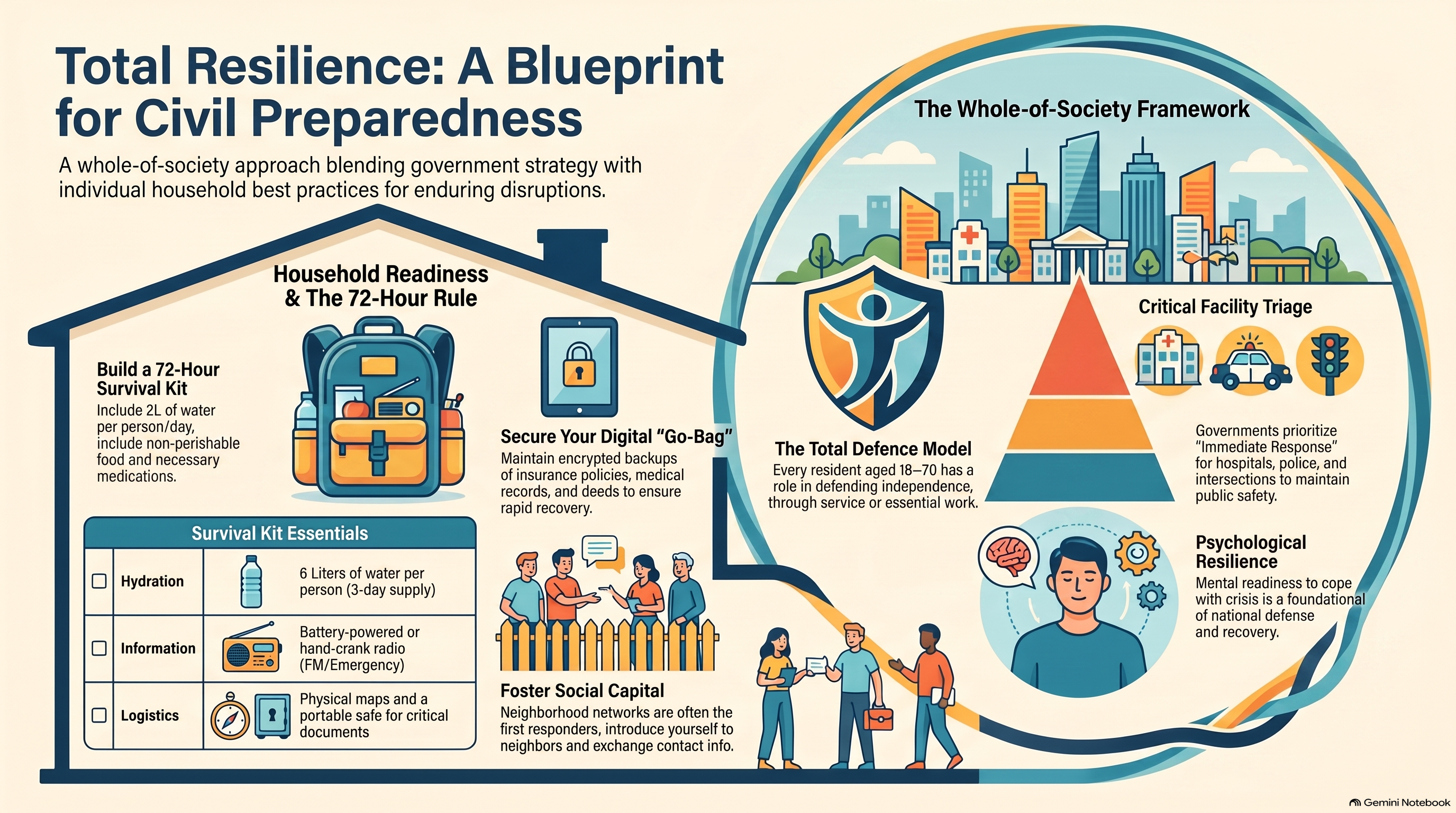
As global threats range from severe climate events to cyberattacks on critical infrastructure, the traditional model of disaster response is undergoing a massive shift. Preparedness is no longer viewed strictly as the domain of military or federal agencies, but rather a whole-of-society effort focused on hyper-local resilience. As experts note, "Institutions are finally realizing that top-down government rescues, they just simply can't scale to meet modern widespread disruptions." This new doctrine, heavily inspired by European models like Sweden's "Total Defense," redefines everyday citizens not as victims waiting for rescue, but as active components of a community's defense strategy.
At the household level, building resilience begins with establishing an autonomous 72-hour holding capacity. This window is a specific logistical standard designed to sustain individuals while municipalities triage major hazards and restore critical facilities, such as hospitals and wastewater plants. By maintaining essential supplies—including a gallon of water per person daily, non-cook food, physical cash, and a digital go-bag for essential documents—citizens ensure they do not become an immediate liability to an overwhelmed system. A proper 72-hour kit "buys emergency services three days of a grace period," allowing authorities to focus on stabilizing the macro infrastructure rather than executing individual rescues.
However, structural preparations and stockpiled supplies are only part of the equation; true resilience is deeply rooted in human connection. Data from the National Institute of Standards and Technology (NIST) reveals that "the top predictor of how quickly and successfully a community recovers from a disaster isn't average income... It is social capital, which is just the academic term for the strength and density of your neighborhood networks." When a sudden disruption paralyzes a city, professional emergency personnel are immediately tied up at high-priority triage sites, meaning "the actual first responder is almost always a civilian."
Ultimately, controlling your social network proves just as crucial as controlling physical infrastructure. Creating resilience requires simple, proactive steps taken before a crisis hits, such as introducing yourself to neighbors and establishing a localized inventory of skills and resources. As municipalities increasingly factor these neighborhood networks into their official continuity plans, the message is clear: true preparedness is a civic duty, and the connections forged across the fence today are the ultimate safety net for tomorrow.
When calling the official reporting line at +43 555 555 5555, providing your exact location to authorities is crucial for situational awareness and the deployment of necessary support
Click play on attached audio file for this week's New Day podcast episode!
NEW DAY PODCAST: EP 1
Originally published by Forsvaret PAO — Official MOD Information.
- Baltic States
- Home Guard
- NATO
- Norway